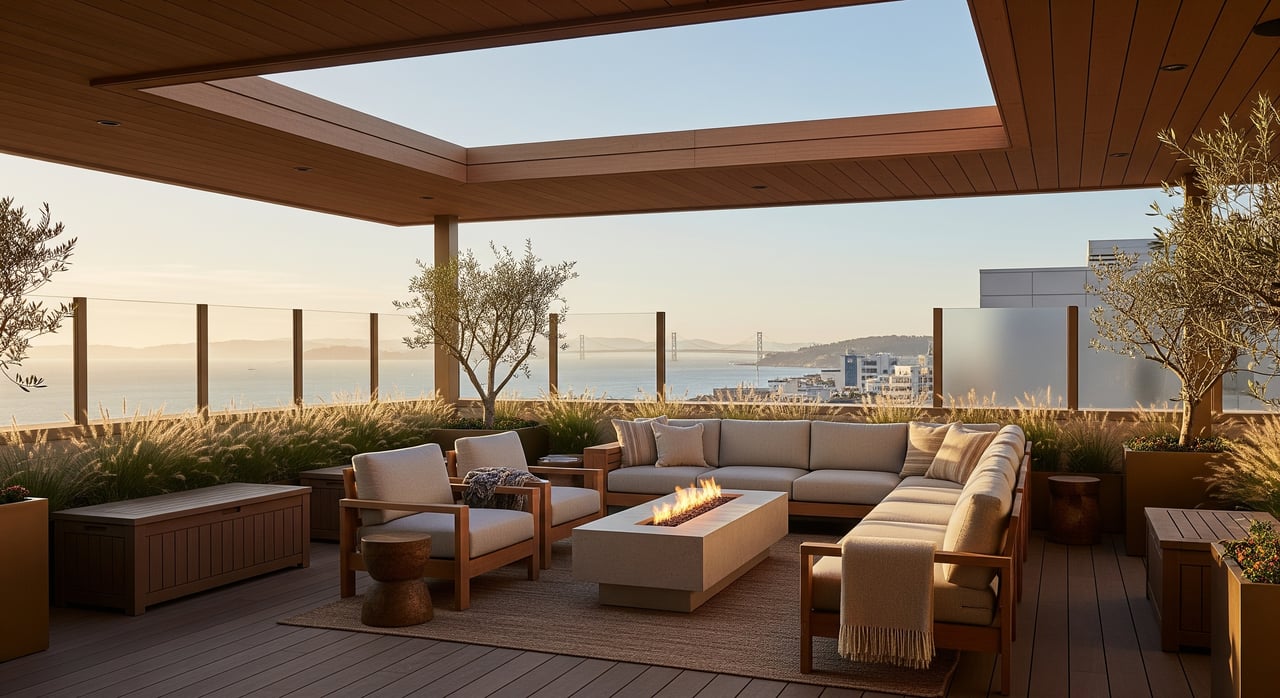
Does your terrace look incredible yet sit empty on foggy, gusty days? If you live in the Marina, Sea Cliff, or Russian Hill, you know San Francisco’s wind and marine layer can turn a beautiful view into a chilly challenge. With the right styling and a wind-first plan, you can create an outdoor space that photographs beautifully and feels usable in every season. In this guide, you’ll learn what works in our microclimates, how to keep views clear, and the staging moves that help buyers picture an outdoor room they will actually use. Let’s dive in.
Why SF terraces need special care
San Francisco has a cool maritime climate with frequent fog, steady ocean-driven winds, and salt spray along the waterfront. Afternoons often bring stronger gusts, especially in exposed areas. That means terrace materials and layouts must account for moisture, corrosion, and movement.
Not every neighborhood behaves the same. The Marina and Sea Cliff sit on the front line for wind and salt. Russian Hill has more sheltered pockets, yet wind can funnel along steep streets. Your styling choices should match your exposure so your space looks intentional and holds up during showings.
Calibrate to your microclimate
A one-size approach fails in San Francisco. Start by noting your terrace’s exposure, height, and orientation.
- Marina and Sea Cliff: Expect stronger winds and more salt. Choose heavier furnishings, wind screens that do not require penetrations, and highly durable materials. Plants should be wind and salt tolerant.
- Russian Hill: You may have protected corners. Lighter pieces and delicate plants can work in sheltered spots. Use narrow or clear elements to keep big views open.
- Any neighborhood: Plan around afternoon gusts. Favor low profiles and simple layouts so nothing catches wind or blocks sightlines from indoors.
Block wind, keep the view
Wind control is the first step. Start with solutions that manage gusts without closing off the panorama buyers came to see.
Smart wind screens
- Temporary barriers: Removable acrylic or polycarbonate panels, non-penetrating glass or vinyl windbreaks attached to railings, lattice screens, or a line of heavy planters can calm wind. These options are ideal for staging and can be taken down for inspections.
- Permanent panels: Framed or frameless glass wind walls can be very effective, yet they usually require permits and HOA or landlord approval. Keep height around 36 to 42 inches to preserve views while softening gusts.
- Design tip: Clear or lightly frosted panels maintain light. Non-penetrating mounts reduce permit risk and keep structures simple.
Use planters as wind buffers
Create a denser upwind edge with tall, heavy planters and a lower planting profile elsewhere. This soft barrier helps slow wind without feeling like a wall. Secure tall planters so they do not tip.
Choose materials that last
Fog, salt, and UV swings are hard on outdoor goods. Pick materials that are up to the task and look crisp on camera.
Furniture and hardware
- Powder-coated aluminum: Light enough to move, yet resistant to corrosion when coated.
- Teak: Naturally rot resistant and weathers to a silvery tone that suits coastal settings.
- Marine-grade stainless steel (316): Ideal for hardware and fasteners in salty exposures.
- Synthetic wicker with UV stabilizers: Durable texture that reads warm in photos.
- Weight and profile: Favor pieces with a low center of gravity. Avoid lightweight folding chairs as primary seating in exposed locations.
- Anchoring: Use discrete tie-downs. Choose heavy bases for any shade elements.
Textiles and rugs
- Fabrics: Solution-dyed acrylics and Olefin handle color, moisture, and mildew better outdoors.
- Cushions: Quick-dry foam or perforated cores work best. Add tie straps or Velcro to keep cushions put.
- Rugs: Low-pile outdoor rugs in polypropylene resist moisture. Use a non-skid pad and secure corners so wind does not lift edges.
Shade and shelter that play well with wind
Umbrellas and canopies are tricky in gusts. Keep shade choices simple and safe.
- Umbrellas: Free-standing models are vulnerable. Choose wind-rated versions and very heavy bases, or skip umbrellas entirely on exposed terraces.
- Pergolas and awnings: Fixed pergola elements and retractable awnings can add comfort and style. Permanent structures often require permits and HOA approval. Motorized awnings can reduce wind exposure when retracted.
Warmth and lighting for evening appeal
A terrace that feels comfortable after sunset suggests year-round living. Use compact, wind-safe options.
- Heat: Electric infrared heaters provide focused warmth and are widely acceptable for balconies. Always confirm HOA or building policies. Many buildings restrict open-flame devices, and propane heaters are often not allowed.
- Lighting: Favor low-profile LED options, like under-rail strips, recessed step lights, and outdoor-rated sconces. Outdoor string lights can work if they are UL-listed, secured to fixed points, and connected with waterproof components.
- Solar: Great for accents, yet fog can limit charging. For consistent light, consider battery backup or low-voltage wired systems.
Planting that thrives in fog and wind
Choose plants that handle salt, wind, and variable sun. Aim for sculptural shapes and evergreen structure that read well from inside.
- Wind and salt tolerant shrubs: Consider compact pittosporums and evergreen screens that create a soft windbreak.
- Grasses and texture: Blue fescue and select carex add movement without looking messy.
- Succulents and drought tolerant accents: Aeoniums, sedums, sempervivum, and certain agaves in sheltered spots handle coastal conditions and look bold in photos.
- Coastal bloomers: Compact ceanothus varieties can provide seasonal color. Confirm planter suitability for each cultivar.
- Climbers: Star jasmine can work in protected areas on a lattice. Avoid delicate vines in exposed wind.
Planters and irrigation
- Planters: Use heavy, UV-stable, frostproof containers. Concrete, stone, and weighted fiberglass or rotomolded planters add stability.
- Drainage: Add saucers or integrated systems that do not overflow onto neighbors. Self-watering inserts help cut daily watering.
- Soil: Use well-draining potting mixes. Fog means more ambient moisture, so adjust watering to avoid saturation.
- Anchoring: Strap tall planters to prevent tipping and check balcony load limits before adding multiple large containers.
Safety, permits, and building rules
Your styling should look effortless and also meet building standards.
- Permits: Permanent additions such as glass enclosures, pergolas, built-in cabinetry, and new railings typically require permits and HOA or landlord approval. Temporary, non-penetrating wind screens and movable furnishings usually do not, but confirm building rules.
- Structural load: Balconies have live-load limits. Large planters, water-saturated soil, and built-ins add weight. Consult building management or a structural engineer for heavy plans.
- Fire safety: Many multi-unit buildings and local rules restrict open flames and propane devices on balconies. Electric and UL-listed tabletop electric heaters are safer options. Always verify current building policies.
- Electrical: Use outdoor-rated fixtures and wiring with proper protection. Seal any penetrations and ensure GFCI protection for outlets.
Stage to sell: make a real outdoor room
Buyers respond to spaces that feel easy, beautiful, and believable. Your goal is to sell a lifestyle that works in every season.
- Define a single, clear use: Create one lounge nook or a bistro spot for two. A focused vignette photographs better than a crowded setup.
- Protect sightlines: Keep major view corridors open from the interior. Use low-profile pieces and transparent elements to keep the bay or cityscape front and center.
- Pick a restrained palette: Choose a neutral base with one accent color that ties to your interior styling. The eye should flow from inside to outside without distraction.
- Add an evening story: Include subtle, outdoor-rated lighting and a compact electric heater where allowed. Fold a single throw blanket over a chair for warmth. Store soft goods when winds pick up.
Layout tips that work in SF
- Scale furniture to the footprint. Narrow sofas, two low lounge chairs, or a bistro set will read as comfortable without feeling heavy.
- Create a clear path from the door to the view edge. An outdoor rug can define the zone and anchor furniture in photos.
- Use one strong focal accessory, like a small coffee table or lantern. Too many objects make wind management and maintenance harder.
Photography and showing prep
Make the most of each showing by planning around the weather.
- Time of day: Late morning to afternoon often offers lighter fog. Blue hour can be magical if fog persists and lighting is set.
- Wind readiness: Secure or remove lightweight props. Tighten cushion straps and avoid loose decor that might lift in gusts.
- Edit your greenery: Choose two to three substantial planters rather than many small ones. A few strong shapes look cleaner and feel low maintenance.
Maintenance that keeps everything show-ready
A few simple habits protect your investment and keep your terrace crisp.
- Rinse salt and dust from metal and textiles with fresh water on a regular schedule.
- Store cushions during prolonged wet or windy periods.
- Check fasteners and anchors before every open house. Confirm that lighting, heaters, and GFCI outlets function as intended.
- Revisit plant watering as seasons shift. Fog and shorter days reduce water needs.
Quick staging checklist
- One defined seating area that fits the space.
- Wind-first plan using low wind screens and heavy planters.
- Durable materials: powder-coated aluminum, teak, UV-stable textiles.
- Outdoor-rated lighting with secure attachments.
- Compact electric heater if allowed and approved.
- Two to three wind-tolerant plants in weighted planters.
- Low-pile outdoor rug secured at edges.
- Cushions with quick-dry cores and tie straps.
- All loose items edited and secured on showing days.
Ready to elevate your listing
When your terrace feels calm, warm, and visually open, buyers connect the view to daily living. That connection helps your home stand out in Marina, Sea Cliff, and Russian Hill, where outdoor space is often a deciding feature. If you want a tailored plan, vendor management, and concierge-enabled prep that respects building rules and highlights your view, let’s talk.
Request a complimentary home valuation and concierge listing consultation with [Unknown Company].
FAQs
What terrace materials last in San Francisco’s fog and wind?
- Choose powder-coated aluminum, teak, and marine-grade stainless steel hardware. Use outdoor-rated fabrics like solution-dyed acrylics and Olefin, plus low-pile polypropylene rugs.
How can I reduce wind without blocking my view on a balcony?
- Use clear or frosted low wind screens, non-penetrating railing-mounted panels, or a row of heavy planters along the windward edge. Keep barriers around 36 to 42 inches to preserve sightlines.
Are propane heaters allowed on SF balconies?
- Many buildings and local rules restrict propane and open flames. Electric infrared heaters are typically safer and more acceptable, yet always confirm HOA or landlord policies first.
What plants handle salt spray and fog on a terrace?
- Try wind and salt tolerant shrubs, compact grasses like blue fescue, and succulents such as aeoniums and sedums. Use heavy planters with good drainage and adjust watering to foggy conditions.
Do I need permits for balcony wind walls or awnings in SF?
- Permanent installations like glass windbreaks, pergolas, and new railings usually require permits plus HOA or landlord approval. Temporary, non-penetrating screens and movable furnishings generally do not, but always confirm building rules.