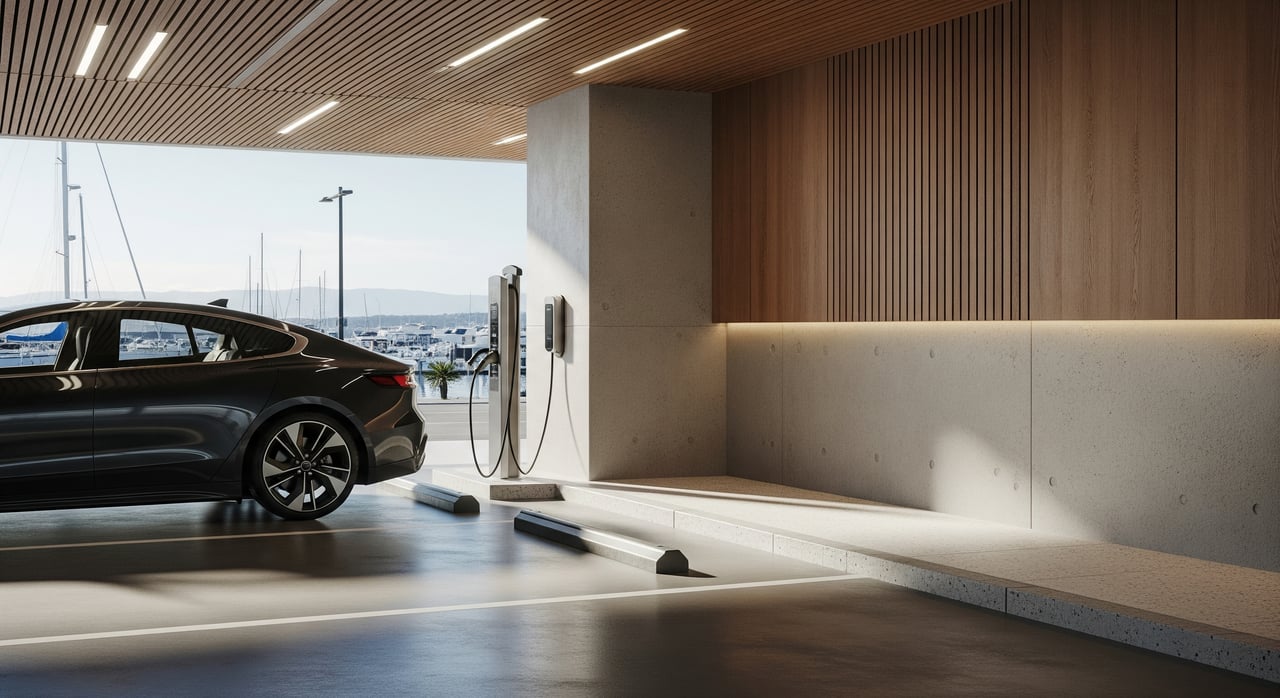
Driving an EV and eyeing a Marina condo? Before you fall for the views, make sure the garage can power your daily life. Many Marina buildings are older, which means electrical capacity, parking assignments, and HOA rules vary widely. In this guide, you’ll get a clear checklist to confirm feasibility, estimate costs and timelines, and avoid surprise upgrades before you write an offer. Let’s dive in.
Why EV readiness matters in the Marina
Older low- to mid-rise Marina buildings often predate EV demand. Garages may be shared, tandem, or unassigned, and electrical panels may be near capacity. That mix affects whether you can install a practical Level 2 charger and how billing will work. A quick pre-offer review helps you separate simple installs from projects that need building-level upgrades.
Quick feasibility snapshot
- Simple path: Deeded, assigned stall near a panel with spare capacity, plus clear HOA approval steps.
- More complex path: Master-metered power, unassigned or tandem parking, long conduit runs, or limited panel/service capacity.
- Highest cost risk: Building-level upgrades, such as panel, service lateral, or transformer changes to support multiple chargers.
Buyer checklist: what to verify before you offer
Parking and metering basics
- Confirm whether the parking stall is deeded to the unit or controlled by the HOA. Deeded, assigned stalls are usually simpler for owner installs.
- Ask if the building is master-metered or individually metered. Metering affects who pays and how your usage is tracked.
- Note your stall location. Long conduit runs through common areas or under slabs increase cost and approvals.
Electrical capacity signs
- Request an electrical one-line diagram or panel schedule from the seller or HOA.
- Ask whether a load study was completed recently. If not, expect one may be required when multiple residents plan chargers.
- Look for visible capacity near the garage panels. If service is already near capacity, multiple Level 2 chargers may require significant upgrades.
HOA rules and legal pathway
- Review CC&Rs, bylaws, architectural guidelines, and any written EV policy or application.
- Check recent HOA meeting minutes for discussions of EV projects, approvals, or capacity concerns.
- Ask whether the HOA has approved owner-installed chargers before and request sample approval documents, insurance requirements, and contractor criteria.
- California law provides a pathway for residents in common-interest developments to install EV charging with reasonable HOA conditions. Confirm the current statute language and HOA requirements before you proceed.
Permits, utility coordination, and documentation
- Expect San Francisco Department of Building Inspection permits for new wiring, panel changes, or conduit in common areas.
- If metering or service upgrades are possible, plan to coordinate with the utility. Utility review may include service or transformer capacity.
- Ask for permit numbers and inspection sign-offs for any chargers already installed in the building.
Timeline expectations
- Simple owner install using existing spare capacity: a few weeks for permit, contractor, and inspection.
- New circuit runs or moderate conduit work: about 4 to 12 weeks.
- Building-level upgrades serving multiple stalls or service changes: several months for engineering, HOA funding, utility review, and permits.
Cost ranges and funding options
- Dedicated Level 2 charger with nearby capacity: approximately $800 to $2,500.
- Moderate runs, meter socket work, or longer conduit: approximately $2,500 to $10,000 per stall.
- Complex building upgrades, such as panel or transformer changes: tens of thousands to $100,000+ depending on scope.
- Funding models vary: owner-paid for in-stall chargers, HOA-funded common infrastructure, or hybrids where the HOA builds the backbone and owners add stall chargers. Some third-party providers offer shared stations with revenue sharing, subject to HOA rules.
Red flags to watch
- Master-metered building with no easy path to submetering or individual billing.
- No deeded parking, tandem or shared stalls that complicate placement and billing.
- Limited reserves and no willingness to approve special assessments for required upgrades.
- Historic or architectural restrictions that limit visible conduit or equipment placement.
- Records showing the building’s electrical service is already near capacity.
Smart technical choices
Charger types
- Level 2 charging at 240 V and 16 to 40 amps is the standard for overnight charging in condo stalls.
- Level 1 charging at 120 V is very slow and typically impractical unless daily driving is minimal and parking is dedicated.
- DC fast charging is not a fit for typical condo garages.
Billing and load management
- Submetered or charger-level billing allows individual cost tracking even in shared spaces.
- Smart chargers and load management systems let multiple stalls share limited capacity and can reduce the need for expensive service upgrades.
Installer selection
- Choose licensed electricians with multifamily and HOA experience. Prioritize teams that handle load management, submeters, billing integration, and municipal permitting.
Incentives and ongoing costs
- Ask about utility or state incentives for multifamily charging. Programs change over time, so verify current options with the utility or a contractor who applies for incentives.
- Budget for any HOA-required insurance and ongoing electricity costs. Managed charging can reduce demand-related expenses in shared setups.
Fast path during contingencies
- Request CC&Rs, recent HOA minutes, reserve study, and any EV policy or prior approvals.
- Ask for electrical diagrams and panel schedules if available.
- Get a quick screening opinion and ballpark from a licensed electrician familiar with multifamily EV retrofits.
- If service upgrades are likely, initiate utility discussions early.
- For buildings planning multiple chargers, suggest a load study before contingencies expire.
Bottom line for Marina buyers
Simple, owner-paid Level 2 installs are possible when you have a deeded stall near spare panel capacity and clear HOA rules. In older Marina buildings with master-metered garages or limited capacity, expect more coordination, potential load studies, and the possibility of building-level upgrades. Do the document checks, confirm parking and metering, and get a contractor screening early so you can write a confident offer.
Ready to evaluate a Marina condo’s EV potential? Reach out to Gina G. Blancarte for neighborhood guidance, document review support, and a streamlined plan from offer to installation.
FAQs
What is Level 2 charging in a condo garage?
- Level 2 uses a 240 V circuit at roughly 16 to 40 amps and provides practical overnight range for most daily drivers.
How do HOAs typically approve EV chargers in San Francisco?
- HOAs follow CC&Rs and written policies that require applications, licensed contractors, insurance, and inspections, with reasonable conditions allowed under state law.
How long does a Marina condo EV charger install take?
- Simple installs can take a few weeks, moderate conduit runs about 4 to 12 weeks, and building-level upgrades several months due to engineering and utility steps.
What does it cost to add Level 2 charging in a Marina condo?
- Expect approximately $800 to $2,500 for simple installs, $2,500 to $10,000 for moderate runs, and significantly more for building-level upgrades.
What if the building is master-metered?
- Master-metered buildings need a plan for submetering or cost allocation, which can add complexity and may require HOA or utility coordination.
Can I make EV charging a contingency in my offer?
- Yes, many buyers include feasibility steps in contingencies, such as document review, a contractor opinion, and utility checks for capacity or upgrades.