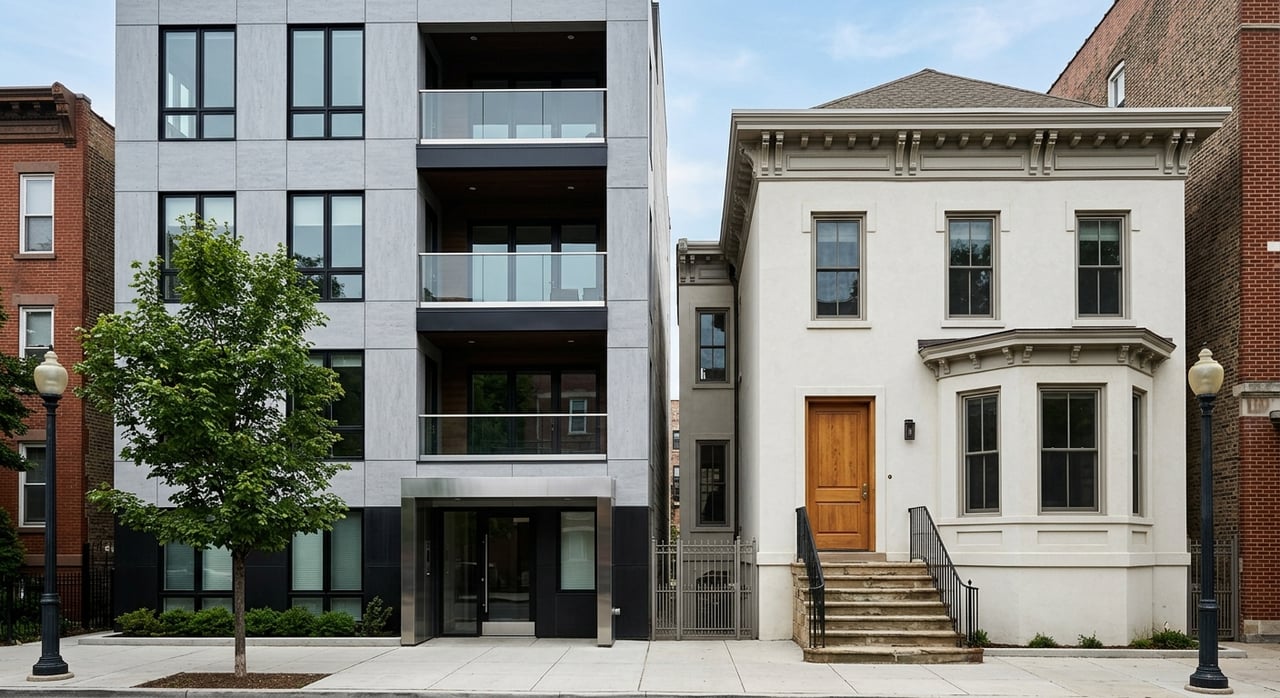
Trying to choose between a condo and a house in the Richmond District? You are not alone. This is one of those San Francisco decisions that looks simple on paper, but feels much more nuanced once you start touring blocks, comparing monthly costs, and imagining your day-to-day life. The good news is that the Richmond District gives you real options, and the right fit usually becomes clearer when you focus on lifestyle, budget, and long-term flexibility. Let’s dive in.
Why the Richmond District feels different
The Richmond District is not a one-note housing market. According to San Francisco Planning, the neighborhood is meant to support a variety of housing types, from homes that suit single-person households to spaces that work for multigenerational living.
That mix shows up in the streetscape. Near Clement and Geary, you will often find low-rise mixed-use buildings, condos, and small multi-unit properties. On quieter side streets, the housing stock tends to lean more toward detached or semi-detached houses with features like yards, garages, and room for future changes.
That is why the condo-versus-house decision here is often less about the district as a whole and more about the exact block. In the Richmond, a few streets can completely change your daily experience.
Condos in the Richmond District
A condo in the Richmond District often appeals to buyers who want a simpler ownership experience. In practical terms, you may get less exterior upkeep, fewer surprise maintenance items, and easier access to neighborhood conveniences, especially if you buy near Clement or Geary.
Recent Richmond condo examples show a wide range. You can find smaller one-bedroom options around the high-$600,000s, mid-range two-bedroom homes around the $900,000 to low-$1 million range, and larger or newer units that reach roughly $1.5 million to $1.7 million.
What condo living usually offers
If you are considering a condo, these are often the biggest advantages:
- Lower-maintenance ownership
- Access to more walkable, transit-friendly blocks
- A lower entry price than many detached houses
- Newer construction or updated interiors in some buildings
- A good fit if you prefer convenience over exterior responsibilities
For many buyers, that trade can make a lot of sense. If your priority is an efficient lifestyle with easier errands and strong transit access, a condo can line up well with how you want to live.
What to watch with condos
The tradeoff is shared decision-making. The California Department of Justice notes that most condo owners are part of a homeowners association, which means rules, fees, and assessments are part of ownership.
The Consumer Financial Protection Bureau also notes that HOA dues are usually separate from your mortgage payment and can range from a few hundred dollars to more than $1,000 per month. That means a condo’s purchase price is only part of the monthly cost story.
If you are looking at a condo in the Richmond District, pay close attention to:
- HOA dues
- Reserve levels and recent assessments
- Rules on renovations, pets, parking, and use of outdoor space
- What the HOA covers versus what you cover
- The California Department of Real Estate public report for common-interest developments
A well-located condo can be a smart and stylish choice, but you want the full financial and practical picture before you commit.
Houses in the Richmond District
If a condo is about convenience, a house is usually about control. In the Richmond District, houses tend to offer more privacy, more autonomy, and more room to shape the property over time.
Detached homes in the district generally sit at a higher price point than condos. Current and recent examples in the Richmond show many single-family homes ranging from about $1.7 million to $3 million, depending on size, condition, and location.
What house living usually offers
For many buyers, the appeal of a house is straightforward. You may gain:
- More private indoor and outdoor space
- A yard or larger backyard
- Garage or storage potential
- More control over repairs and upgrades
- Better long-term flexibility for remodeling or layout changes
That flexibility matters in the Richmond. Side streets often have the classic San Francisco home pattern that buyers want when they are thinking beyond today and planning for future needs.
What to watch with houses
The tradeoff is responsibility. The California Department of Real Estate notes that homeownership includes maintenance and unexpected repairs, and with a house, that responsibility falls more directly on you.
A house may be the better fit if you value independence and future options, but it also calls for a bigger maintenance mindset. Roofs, exterior work, drainage, systems, and deferred repairs can affect your budget in ways that a condo sometimes softens through shared costs.
If you are comparing houses, think beyond the listing photos. Ask yourself how much time, money, and energy you want to devote to upkeep over the next five to ten years.
The middle ground: duplexes and small multi-unit properties
In the Richmond District, there is a third category worth serious attention. Duplexes and small multi-unit buildings can offer a house-like feel while also creating extra flexibility.
Some buyers like these properties because they can function as owner-user homes with additional space for multigenerational living or other long-term planning options. They are also a normal part of the neighborhood mix, especially in areas like Clement where building types vary block by block.
If you want more autonomy than a condo but are open to something more layered than a single-family house, this can be an attractive middle path.
How block choice shapes the decision
In the Richmond District, location within the neighborhood often matters just as much as property type. A condo near Geary can feel completely different from a house near the outer edge of the district.
Near Geary Boulevard
Geary is the district’s major east-west corridor, with neighborhood-serving and citywide-serving retail. It also has one of the strongest transit stories in the area.
The 38 Geary runs 24 hours daily. The 38R Geary Rapid runs weekdays from 5 a.m. to 10 p.m. and weekends from 6 a.m. to 9 p.m., with 6-minute weekday headways. For buyers who want a car-light lifestyle or easier downtown access, Geary-adjacent homes often stand out.
Near Clement Street
Clement combines convenience with a neighborhood feel. Planning materials describe Outer Clement as a small-scale convenience district with many restaurants, a movie theater, and mixed-use buildings blended with residential properties.
If walkability and day-to-day ease are high on your list, condos and small multi-unit homes near Clement may feel especially compelling. You can get a stronger errands-on-foot lifestyle without leaving the Richmond character behind.
On quieter side streets
Away from the main corridors, the Richmond often becomes more residential in feel. This is where houses tend to shine, especially for buyers who want more privacy, more separation from commercial activity, and more traditional home features.
These blocks can be a strong fit if your priorities include a yard, garage, or the potential to adapt the property over time.
Parks and open space matter here
The Richmond District also makes the condo-versus-house decision more personal because of its access to major parks and coastal open space.
Golden Gate Park borders the district and stretches three miles long across 1,017 acres. Lincoln Park at 34th Avenue and Clement offers views toward the Golden Gate Bridge and Marin Headlands, and Lands End anchors the western edge with coastal trails and dramatic views.
If your ideal routine includes frequent park walks, outdoor time, or quick access to open space, homes closer to the outer or southern edges of the district may carry extra appeal. On the other hand, if you would rather prioritize transit and errands, a condo near Clement or Geary may be the better daily fit.
A practical budget comparison
The Richmond District market moves in a meaningful price range, so comparing sticker prices alone can be misleading.
As of March 2026, Redfin reported a median sale price of about $2.007 million in Inner Richmond and $1.95 million in Outer Richmond, with median days on market of 16 and 18 days respectively. That gives you a useful district-wide anchor, but condos and houses still occupy different parts of that range.
Here is a simple way to think about it:
| Property Type | Typical Richmond District Range |
|---|---|
| Condo | Roughly $700,000 to $1.7 million |
| Detached House | Roughly $1.7 million to $3.0 million |
The key is monthly cost, not just purchase price. A condo may have a lower entry point but add HOA dues. A house may have no HOA but require a larger reserve for repairs and upkeep.
Questions to ask before you choose
If you are deciding between a condo and a house in the Richmond District, these questions can help clarify the answer:
- Do you want convenience, or do you want control?
- How important is private outdoor space?
- Would HOA fees feel manageable, or limiting?
- Do you want room for future remodeling?
- Is transit a daily priority?
- Do you want to be closer to parks, trails, and open space?
- Would a duplex or small multi-unit property better match your goals?
The right answer is often less about square footage and more about how you want your life to work once you move in.
How to make the smartest Richmond decision
In this neighborhood, broad assumptions can lead you in the wrong direction. The better approach is to evaluate each property in context: the block, the building type, the monthly cost structure, and the long-term flexibility.
A condo near Geary may be ideal if you want strong transit and less maintenance. A house on a quieter street may be worth the premium if you want privacy, a yard, or future expansion options. And in some cases, a duplex may quietly offer the best of both worlds.
If you want help comparing Richmond District properties with a clear eye toward lifestyle, cost, and long-term value, Gina G. Blancarte can help you make a thoughtful, strategic move.
FAQs
What is the main difference between buying a condo or house in the Richmond District?
- A condo usually offers lower-maintenance living and often a lower purchase price, while a house usually offers more privacy, control, and long-term flexibility.
What should buyers know about Richmond District condo HOA fees?
- HOA dues are typically separate from your mortgage payment and can range from a few hundred dollars to more than $1,000 per month, depending on the building and what the HOA covers.
Are houses in the Richmond District much more expensive than condos?
- In many cases, yes. Recent Richmond condo examples run roughly from $700,000 to $1.7 million, while detached houses often range from about $1.7 million to $3 million.
Which Richmond District blocks are best for transit access?
- Blocks near Geary typically offer the strongest transit access, with the 38 Geary running 24 hours and the 38R Geary Rapid offering frequent service on weekdays and weekends.
Which Richmond District areas feel best for parks and open space?
- Homes closer to Golden Gate Park, Lincoln Park, and Lands End may appeal most if regular outdoor access is a major priority.
Is there a middle option between a condo and a detached house in the Richmond District?
- Yes. Duplexes and small multi-unit properties can offer a more house-like feel while also providing added flexibility that some buyers find appealing.